
 (804) 673-6676


 An FSA is an employer-sponsored, tax-advantaged savings account. It allows you to set aside “pre-tax” money—meaning the money is taken out of your paycheck before taxes are calculated—to pay for out-of-pocket healthcare and dependent-care expenses. The Bottom Line: Because you aren’t paying taxes on this money, you effectively lower your taxable income and increase your spending power for health needs.
- Tax Savings: Pre-tax contributions save you money on every dollar.
- Employer-Based: You must work for a company that offers an FSA to participate.
- Use It or Lose It: Most funds must be spent within the plan year, though some plans offer small rollovers or grace periods.
How It Works
Your chosen contribution amount is divided across your yearly paychecks and deducted automatically. The Federal FSA Program estimates that those with an FSA save 30 percent on healthcare expenses on average.
What Can You Buy With an FSA?
Beyond doctor’s visits and hospital fees, you can also use your FSA funds for:
- Everyday Care: Band-aids, bandages, sunscreens, and menstrual care products.
- Vision & Dental: Eyeglasses, contact lenses, laser eye surgery, and dental cleanings.
- Diagnostics: Blood pressure monitors, cholesterol test kits, and thermometers.
- Therapy: Acupuncture and chiropractic care.
- Family Planning: Birth control and pregnancy tests.
The Pros and Cons
The Benefits
- Instant Tax Break: Your federal and employment taxes are lowered immediately.
- Day-to-Day Savings: Covers “hidden” costs like sunscreen, first aid kits, and over-the-counter meds.
- Upfront Funding: With a Healthcare FSA, your full annual amount is usually available on Day 1 of the plan year.
The Limitations
- Not Portable: If you leave your job, you generally lose the account.
- Strict Deadlines: Most plans require you to spend the balance by Dec 31st (check if your plan allows a $680 rollover or a 2.5-month grace period).
- No Investing: Unlike an HSA, FSA funds do not earn interest or grow in the stock market.
Exploring the Different Types of FSAs
Not all FSAs are the same. Depending on your needs, your employer might offer:
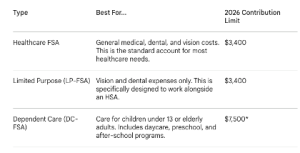
| *Note: For the Dependent Care FSA, the limit is $3,750 if you are married and filing taxes separately. | |
Is an FSA Right for You?
Opening an FSA is a great way to save money on taxes and prepare for healthcare costs. As with other types of savings accounts, it allows you to contribute and stash away money, but in this case, that money is taken out of your paychecks in a set amount and is nontaxable. Check to see if your employer matches contributions as well.
Understanding the rules, benefits, and limitations of these accounts will allow you to maximize their value and ensure you’re making the most of this employee benefit.